Caring for the Environment Through Creativity: Painting Trash Bins and Learning Waste Sorting
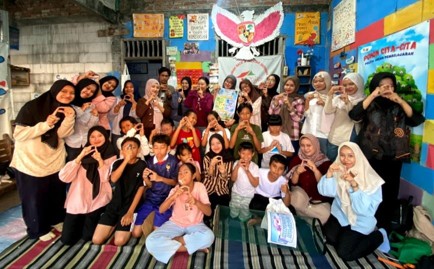
FINAL PROJECT – Environmental Awareness (Painting Trash Bins and Waste Sorting)
Day/Date: Saturday, May 30, 2026
Time: 3:30 PM – 5:00 PM WIB
Location: Pijar Tambak Mayor, Surabaya
Activity: Pijar Volunteer Batch 2 Group 39 (Final Project in Collaboration with Batch 1)
At 3:30 PM, we arrived at Pijar for a very special day. Unlike the previous meetings, this final project was conducted collaboratively by volunteers from both Batch 1 and Batch 2. The front yard of Pijar was already bustling with excitement. Large metal-wire trash bins had been neatly arranged, waiting to be transformed with colorful paint. The children arrived with curious expressions, eagerly asking, “What are we going to do today?” We simply smiled and replied, “Just wait and see—it’s going to be fun!”
The activity began with a collective prayer led by one of the volunteers. Afterwards, all participants and volunteers sat together in a large circle for an introductory discussion. The volunteers engaged the children by asking questions about their daily waste disposal habits and whether they knew the difference between biodegradable and non-biodegradable waste. Many children enthusiastically shared their ideas, mentioning items such as dry leaves, food scraps, plastic, and used bottles. Using their responses, the volunteers introduced two major categories of waste: organic waste (food leftovers, dry leaves, and vegetable scraps) and inorganic waste (plastic, bottles, cans, and food packaging).
Following the discussion, the children moved on to the main activity: painting large trash bins made of metal wire. Volunteers distributed the prepared bins and demonstrated the proper painting techniques, including how to hold a paintbrush, apply the right amount of paint, and use effective brush strokes to ensure the paint adhered well to the surface. Once the demonstration was complete, the children eagerly began painting. They experimented with a variety of bright colors, creating unique combinations and colorful designs. Some children blended shades of blue and yellow, while others boldly combined red and green, expressing their creativity freely.
After the painting session, the trash bins were placed under the afternoon sunlight to dry. While waiting, the children participated in additional environmental activities, including waste-sorting exercises and assembling parts of the trash bins. These activities reinforced the environmental concepts introduced earlier and allowed the children to practice categorizing waste correctly.
The program then continued with a reflection session. The children gathered in a circle once again and were invited to share their impressions of the day as well as their experiences throughout the volunteer program at Pijar. The atmosphere became emotional as both children and volunteers reflected on the meaningful moments they had shared together. Volunteers concluded the session by delivering a simple but important message: maintaining cleanliness does not require grand actions; it begins with simple habits such as throwing trash in the proper place and sorting waste at home. These small actions can contribute significantly to a healthier environment.
The activity concluded with a closing prayer. Before heading home, the children and volunteers gathered for a group photo in front of the colorful trash bins, which were still drying under the sun. Once the paint had dried completely, the bins were assembled and placed around the Pijar area. The children’s faces radiated pride and happiness as they admired their collective work. The colorful trash bins now decorate the Pijar environment as a lasting reminder that children can actively contribute to protecting and caring for their surroundings.
Through this final project, we learned that child advocacy and protection extend beyond safeguarding children from physical harm. It also involves nurturing responsibility, environmental awareness, and social values. The children learned that waste is not merely something to discard but something that can be managed wisely. They also learned the importance of teamwork, sharing responsibilities, and taking pride in their achievements. Ultimately, this project served as a meaningful form of social and psychological support, contributing positively to the children’s overall growth and development.
