Third Volunteer Teaching Session at Alma Karya Foundation: Fostering Learning, Creativity, and Confidence Through Interactive Activities
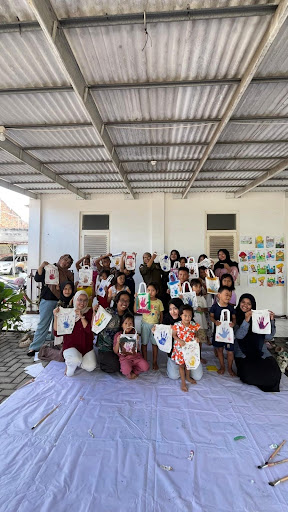
On Saturday, May 2, 2026, the third volunteer teaching session was successfully conducted at the Alma Karya Foundation. The activity ran smoothly and was attended enthusiastically by children ranging from early childhood education (PAUD) to elementary school level.
The learning activities began with an opening session and an ice-breaking activity designed to create an active, engaging, and enjoyable learning atmosphere. Through various fun games and interactive activities, the children became more enthusiastic and prepared to participate in the day’s learning experiences.
The facilitators, consisting of students from the Early Childhood Teacher Education Program (PG-PAUD) at Universitas Negeri Surabaya (UNESA), organized a variety of educational activities aimed at developing the children’s cognitive, motor, language, and social-emotional skills.
During the main session, the children participated in educational games, counting exercises, drawing activities, and other creative learning experiences tailored to their age and developmental level. These activities were designed to make learning enjoyable while helping the participants strengthen their fundamental academic and developmental skills.
In addition, the children were encouraged to engage in discussions and work collaboratively in small groups. Through these group activities, they had opportunities to practice communication skills, express their ideas, and develop positive social interactions with their peers. The collaborative learning environment also promoted teamwork, cooperation, and mutual respect among the participants.
Beyond academic learning, the university students provided motivation and encouragement to inspire the children to remain enthusiastic about learning and to confidently express their thoughts and opinions. Throughout the session, the atmosphere was warm, supportive, and filled with joy. The children appeared increasingly comfortable, confident, and actively involved in every activity.
During the implementation of the program, one of the challenges faced by the facilitators was maintaining the children’s focus and concentration for extended periods. To address this challenge, the facilitators utilized various creative teaching strategies, interactive methods, and educational games to keep the activities engaging and enjoyable. These approaches helped sustain the children’s interest and participation throughout the learning process.
Through the successful implementation of this activity, it is hoped that the children gained meaningful learning experiences and further developed their basic cognitive, motor, language, and social skills. Furthermore, the program provided valuable practical experience for the university students, enabling them to deepen their understanding of early childhood characteristics and apply the knowledge and skills they had acquired during their academic studies.
This report is prepared as an official record of the activities that have been successfully carried out and as documentation of the positive learning experiences shared between the children and the volunteer facilitators.
