Second Volunteer Teaching Session at Alma Karya: Developing Numeracy Skills and Fine Motor Precision Through Interactive Learning
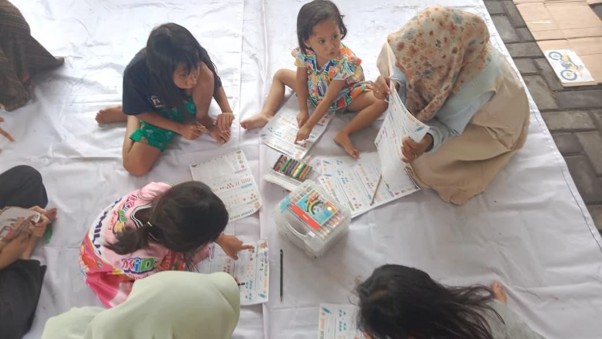
SURABAYA – A cheerful and enthusiastic atmosphere filled the Alma Karya Foundation on Saturday, May 16, 2026. Entering the second week of the volunteer teaching program, the learning activities were intensified through the theme “Logical Classification and Motor Precision.” This session was specifically designed according to the children's age groups—Preschool/Kindergarten and Elementary School—to ensure that literacy and numeracy learning objectives could be achieved effectively.
Joyful Learning for Preschool Children
For preschool-aged children, the focus of the learning activities was on introducing basic numbers from 1 to 10. The children participated in hands-on counting activities using real objects found around them. They were also introduced to simple addition and subtraction concepts through interactive exercises that encouraged active participation.
In addition, the children practiced tracing letters and coloring pictures in a relaxed and enjoyable environment. These activities were designed to support early literacy development, improve number recognition, and strengthen fine motor skills without placing pressure on the children. The learning process emphasized fun and exploration, allowing the children to gain confidence while developing foundational academic skills.
Creative Challenges for Elementary School Students
Meanwhile, elementary school students were introduced to a unique approach to learning multiplication. They explored multiplication concepts using the “Japanese Method,” a visual technique that utilizes intersecting lines to solve multiplication problems. This interactive method successfully sparked curiosity among the participants and transformed mathematics from a subject often considered difficult into an engaging and enjoyable logic-based activity.
Through guided practice and discussion, the students were able to understand multiplication concepts more easily while strengthening their problem-solving and critical-thinking skills. The visual nature of the method also helped learners who benefited from concrete and hands-on learning experiences.
Developing Fine Motor Skills Through Origami
To further enhance fine motor precision and pattern recognition, all participants took part in an origami activity using colorful paper. Under the guidance of the educational coordinators, the children carefully followed folding instructions and gradually transformed the paper into adorable fish-shaped origami creations.
This activity required concentration, patience, and attention to detail while simultaneously stimulating creativity and hand-eye coordination. The children showed great enthusiasm throughout the process and were excited to see their finished artwork.
A Proud and Meaningful Conclusion
The second meeting concluded with an evaluation and reflection session. During this time, the children were encouraged to share what they had learned and discuss their experiences throughout the day. Many participants proudly demonstrated their understanding of the new multiplication technique and enthusiastically showcased their neatly folded origami creations.
Overall, the activities successfully combined literacy, numeracy, creativity, and motor skill development in an enjoyable learning environment. The positive responses from the children reflected the effectiveness of the interactive teaching methods used throughout the session. It is hoped that these experiences will continue to strengthen the children's confidence, academic abilities, and enthusiasm for learning in future activities.
