Teaching Practitioner Program Strengthens Neuroscience-Based Practices in Early Childhood Education
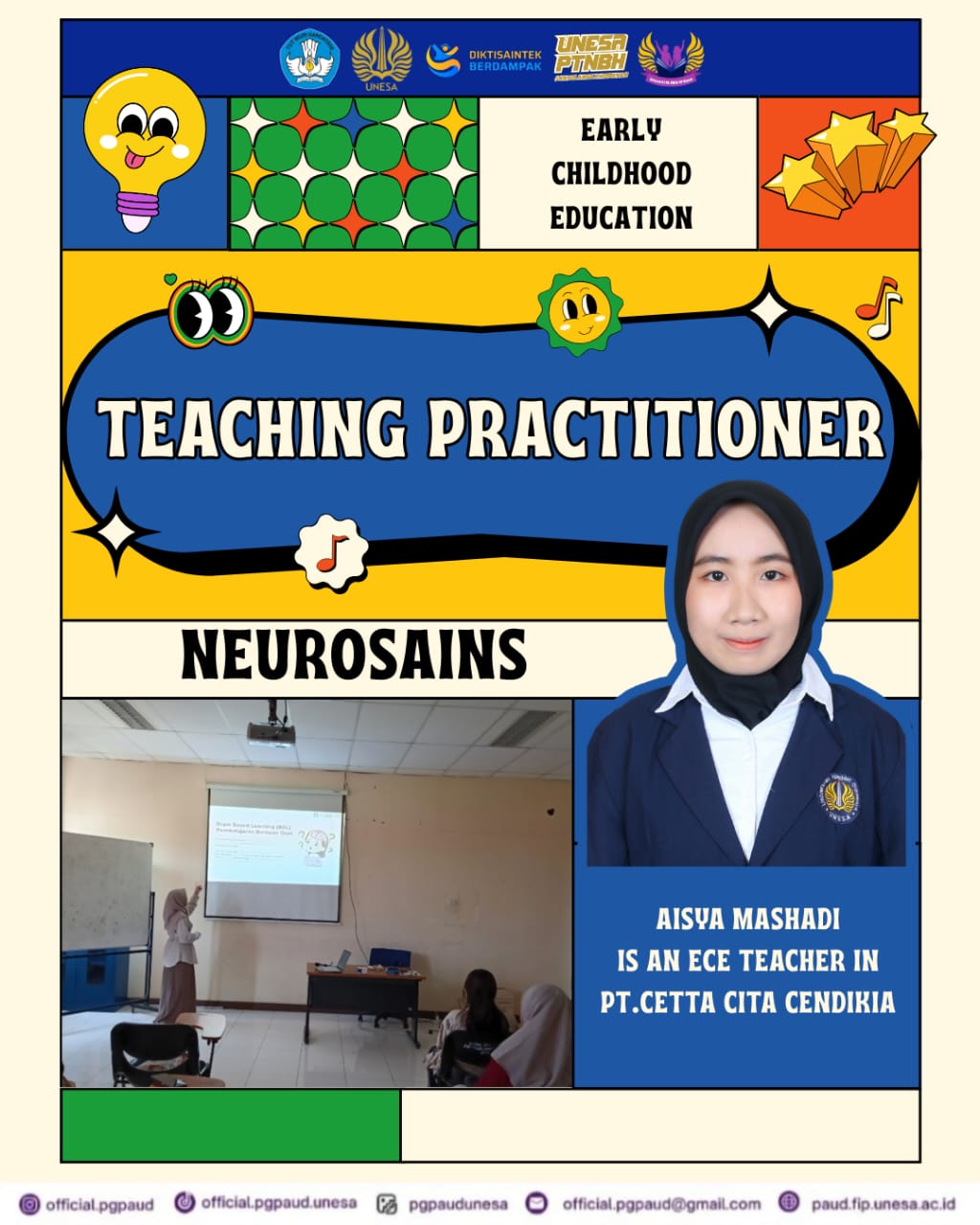
The Teaching Practitioner program in Early Childhood Education highlights the importance of connecting educational theory with real classroom practice. As illustrated in the activity shown, the program focuses on neuroscience-based learning approaches that support optimal brain development in young children. Through direct interaction with practitioners, students gain authentic insights into how scientific understanding of the brain can be applied in early childhood classrooms.
In this session, the practitioner shared practical experiences as an Early Childhood Education (ECE) teacher, emphasizing how knowledge of neuroscience helps educators understand children’s learning processes, emotions, and behavior. The presentation demonstrated that early childhood is a critical period for brain development, making appropriate stimulation, positive interactions, and meaningful learning experiences essential.
The teaching activity took place in an academic setting, where students actively observed and discussed real teaching strategies used in ECE institutions. By using visual presentations and classroom examples, the practitioner explained how play-based learning, emotional security, and multisensory activities contribute to healthy neural connections in young learners.
This Teaching Practitioner initiative also serves as a bridge between universities and professional practice. Students are not only exposed to theoretical concepts but also encouraged to reflect on real challenges faced by teachers in the field. Such programs help future educators develop professional attitudes, critical thinking skills, and practical competence.
Overall, the Teaching Practitioner program in Early Childhood Education provides valuable learning experiences for students. By integrating neuroscience concepts with real teaching practices, the program supports the development of competent, reflective, and child-centered educators who are well-prepared to meet the needs of young children in diverse learning environments.
