Building Literacy Skills and Confidence Through Fun Learning Activities at Karya Kasih Putra
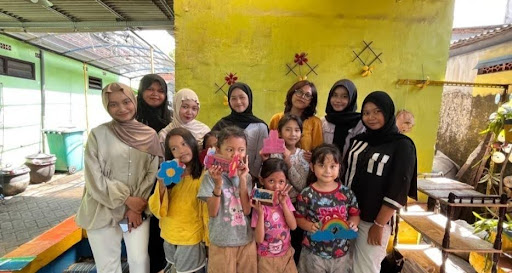
On Thursday, April 23, 2026, a lively and enthusiastic atmosphere filled the community service activity conducted by university students together with children at Karya Kasih Putra during the second meeting. The activity aimed to improve children's literacy and numeracy skills, strengthen their self-confidence, and build emotional connections through engaging and structured educational activities.
The event began with an opening session and a group prayer, followed by an ice-breaking activity consisting of simple movements and concentration games. These activities were designed to create a friendly atmosphere, encourage interaction, and help the children focus before participating in the main learning session.
During the second meeting, the children were divided into several learning groups based on their age and ability levels. This grouping strategy allowed the learning materials to be delivered more effectively and according to each child's level of understanding. Each group was accompanied by two to three university student mentors, making the learning process more focused, interactive, and supportive.
In the main activity, the university students utilized worksheets (LKPD) specifically designed for each age group. Children aged 6–7 years focused on recognizing letters and numbers, while children aged 8–10 years practiced reading paragraphs and solving basic arithmetic problems. The children enthusiastically completed the worksheets with guidance from their mentors, and several confidently volunteered to read their work aloud in front of their peers.
Throughout the learning process, the enjoyable teaching methods encouraged the children to become more confident in reading and answering simple mathematics questions. This interactive approach helped them understand the material more easily without feeling pressured. Expressions of happiness and pride were clearly visible on the children's faces when they successfully completed the exercises provided by their mentors.
The activity concluded with a group photo session and the distribution of snacks as rewards to appreciate the children's participation, enthusiasm, and effort throughout the program.
Overall, the children showed great excitement and enthusiasm during the activity. Positive feedback was also received from both the children and the institution's management, who considered the program successful in providing a creative, interactive, and meaningful learning experience. The activity contributed positively to the development of children's literacy skills and self-confidence from an early age while creating a supportive and enjoyable learning environment.
