Strengthening Early Reading Skills Through Syllable Recognition and Collaborative Learning Activities at Rumah Belajar Novaloka
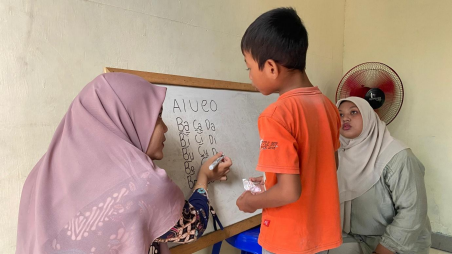
The third-day activity of Group 16 Batch 1 was conducted during the third week as part of the volunteer program organized by the university. The activity took place at Rumah Belajar Novaloka from 1:00 p.m. to 2:00 p.m. and involved children who regularly participate in the learning programs at the center. During this session, the activities focused on developing basic reading skills as a continuation of the learning process carried out in previous meetings. The primary objective was to introduce children to simple syllables as an initial step in strengthening their reading abilities while providing educational assistance for children who still required support in developing basic literacy skills.
The session began with a simple opening activity, including a collective prayer to ensure that the learning activities would run smoothly. Afterward, the facilitators conducted an ice-breaking activity using the children's song Naik Delman. The children sang the song while following hand movements and gestures demonstrated by the facilitators. The participants responded enthusiastically and actively engaged in the activity. This warm-up session helped create a positive atmosphere and prepared the children for the main learning activities.
Following the ice breaker, the university students introduced simple syllables such as ba-ca and bu-ku using a gradual and repetitive teaching approach. The learning process was designed to be relaxed and enjoyable so that the children would not feel pressured while learning. By presenting the material step by step and allowing repeated practice, the facilitators aimed to help the children understand and remember the syllables more effectively.
During the reading session, it became evident that the children's reading abilities varied considerably. Some participants were already able to recognize and pronounce the syllables fluently, while others still experienced difficulties and required additional guidance. The facilitators provided individual assistance to children who needed support, ensuring that each participant received attention according to their learning needs. Despite these differences, several children demonstrated noticeable improvement throughout the activity. They began to recognize syllable patterns and attempted to read independently, reflecting positive progress in their early literacy development.
After the reading session, the activity continued with a group-based educational game. In this activity, the children were asked to select pieces of paper containing words and then rewrite the words in designated spaces provided by the facilitators. The activity was designed in the form of a game to maintain an enjoyable and engaging learning environment. By combining learning with play, the facilitators sought to increase children's motivation and participation throughout the session.
The children appeared highly enthusiastic during the game. They actively collaborated with their teammates to complete the tasks and showed excitement while participating in the activity. In addition to strengthening reading and writing skills, the game also encouraged teamwork, communication, and self-confidence. The university students continuously monitored and assisted the children to ensure that everyone could participate effectively. While some groups demonstrated strong cooperation and independence, others still required guidance and encouragement from the facilitators.
By the end of the session, the atmosphere was noticeably more relaxed and comfortable compared to the first meeting. The children had become increasingly familiar with the learning activities and the presence of the university volunteers. This improvement reflected positive growth in terms of participation, confidence, and overall comfort during the learning process.
Overall, the third-day activity was successfully implemented and achieved its intended objectives. The children demonstrated progress in their basic reading abilities, although continued practice and support remain necessary to further strengthen their literacy skills. Through a relaxed, engaging, and child-friendly approach, the participants were able to enjoy the learning process while gradually improving their reading competence. The activity not only supported literacy development but also fostered collaboration, confidence, and positive attitudes toward learning among the children at Rumah Belajar Novaloka.
