PG-PAUD Students Strengthen Early Reading Skills Through Syllable Recognition and Interactive Learning Activities at Rumah Belajar Novaloka
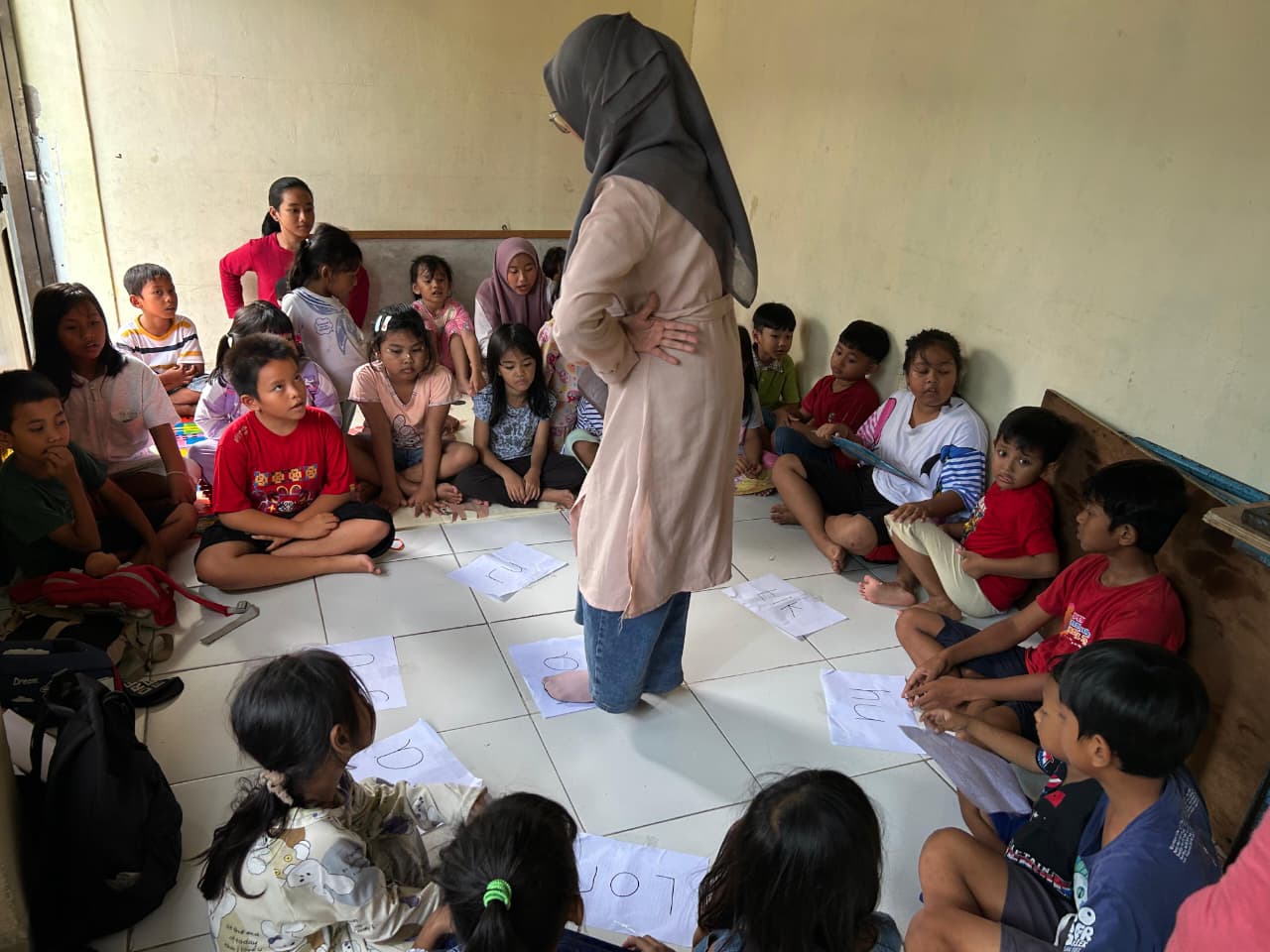
Surabaya – Students of the Early Childhood Teacher Education Program (PG-PAUD) continued their volunteer activities at Rumah Belajar Novaloka Surabaya through a learning session focused on developing children's early reading skills. As the third meeting of the volunteer program, the activity aimed to improve children's ability to recognize, pronounce, read, and write syllables while creating a fun and engaging learning experience.
The activity was organized by Auva Layla Najwa, Bunga Nilna Rifa Salsabila, Shafalia Hamidah Putri, and Naila Safitri Al-Munawwaroh, who have been facilitating various literacy, numeracy, and creativity-based learning activities for children at Rumah Belajar Novaloka. The participants consisted of children enrolled in the learning program at the community learning center.
The main focus of this session was the introduction and practice of syllables ending with consonants, commonly known as closed syllables. This topic was selected to help children strengthen their foundational reading skills and improve their ability to decode simple words. Early reading skills are essential for children's language development and serve as an important foundation for future learning experiences.
The session began with a warm-up activity and a brief review of previously learned materials. The facilitators then introduced a variety of syllables ending with consonant sounds. Using flashcards and visual learning materials, the children were guided to recognize the syllables and practice their pronunciation. The facilitators modeled the correct pronunciation and encouraged the children to repeat the sounds together.
Throughout the activity, the children actively participated in group repetition exercises as well as individual reading practice. Repetition was used as an effective strategy to strengthen memory and improve pronunciation. The children were encouraged to pronounce each syllable clearly and confidently while receiving support and positive reinforcement from the facilitators.
After practicing pronunciation, the participants were asked to write the syllables they had learned on worksheets provided by the facilitators. This writing activity aimed to reinforce children's understanding of the relationship between sounds and written symbols while also developing fine motor skills. The facilitators provided assistance to children who experienced difficulties and encouraged them to complete the tasks independently whenever possible.
To make the learning process more enjoyable, the session concluded with an interactive game called Guess the Syllable. The game combined literacy learning with physical movement, allowing children to learn through play. During the activity, children were required to listen carefully to instructions, identify the correct syllable, and jump toward the appropriate answer. This approach encouraged active participation while helping children maintain focus and concentration.
The children showed great enthusiasm throughout the game. They eagerly took turns participating, demonstrated confidence when answering questions, and actively supported their friends. The combination of learning and movement created a lively atmosphere that kept the children engaged and motivated until the end of the session.
Beyond improving literacy skills, the activity also contributed to the development of children's social and emotional abilities. Through group participation and interactive games, children learned to follow instructions, wait for their turns, cooperate with peers, and celebrate each other's achievements. These experiences play an important role in fostering positive attitudes toward learning and building self-confidence.
The facilitators observed that many participants showed progress in recognizing and pronouncing syllables compared to previous sessions. Several children were also able to write the syllables independently and participate confidently in the learning activities. Their enthusiasm and willingness to engage in every stage of the session reflected the effectiveness of using interactive and child-centered learning approaches.
Through this activity, the PG-PAUD students hoped to strengthen children's early reading abilities while cultivating a love for learning through meaningful and enjoyable educational experiences. The session also provided valuable opportunities for the university students to apply early childhood education theories in real-life learning environments and gain practical teaching experience.
Overall, the third volunteer session was successfully implemented and achieved its intended objectives. The combination of syllable recognition, writing practice, and interactive games created an engaging learning environment that supported children's literacy development while making the learning process enjoyable and memorable. The activity further demonstrated the importance of creative and participatory teaching methods in promoting children's academic and personal growth at Rumah Belajar Novaloka Surabaya.
