Building Confidence and Creativity Through Storytelling and Craft Activities at Rumah Belajar Novaloka
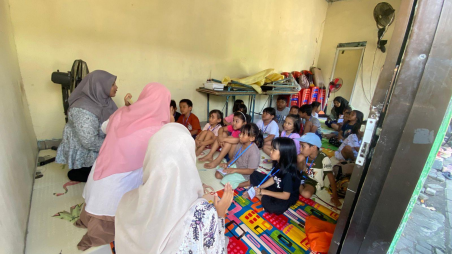
The first-day activity of Group 16 Batch 1 was carried out at the beginning of the first week as part of the volunteer program organized by the university. The activity took place at Rumah Belajar Novaloka from 1:00 p.m. to 2:00 p.m. and was attended by children who regularly participate in the learning programs at the center. This volunteer program was designed to support children who have limited access to educational opportunities, assist in meeting the educational needs of Rumah Belajar Novaloka, and fulfill the requirements of the Advocacy course, which focuses on promoting and protecting children's rights.
The first meeting was a significant moment because it served as an opportunity for the university students and the children to get to know each other. From the beginning of the session, the atmosphere felt warm and welcoming. The children, local residents, as well as Miss Wiwik and Mrs. Ruroh, who are responsible for managing Rumah Belajar Novaloka, warmly welcomed the volunteer team. Their friendliness helped create a comfortable environment and made it easier for the students to interact with the children.
Once the situation became more conducive and the children felt comfortable, the activity continued with a storytelling session. The story selected for the session was simple and used language that was easy for the children to understand. The purpose of this activity was to develop children's self-confidence while also fostering an interest in reading from an early age. During the storytelling session, most of the children listened attentively, although a few occasionally chatted with their friends. Interestingly, when the facilitators asked simple questions about the story, several children were able to answer correctly. This demonstrated that they had been paying attention and actively listening throughout the storytelling process.
The children also showed great enthusiasm when the facilitators asked who would like to come to the front and retell the story. Several participants eagerly volunteered to share what they remembered. This activity played an important role in encouraging two-way communication between the volunteers and the children while also helping to build the children's confidence in speaking in front of others.
After the storytelling session, the activity continued with a creative craft project. The children were given sheets of paper shaped like a head and were asked to attach pieces of colored origami paper to create hair. This activity was designed to develop fine motor skills and encourage creativity. At first, some of the children appeared confused about what they were supposed to do. However, after receiving a demonstration and simple instructions from the facilitators, they gradually began working independently.
The results of the craft activity were diverse and reflected each child's unique creativity. Some children carefully arranged the paper pieces in neat patterns, while others preferred a more free-form approach. A few children demonstrated a perfectionist attitude by organizing the colors systematically, while others chose to create specific hairstyles, such as straight hair or curly hair. Regardless of their approach, all participants showed enthusiasm and made an effort to complete their projects to the best of their abilities. They were especially excited when selecting the colors they wanted to use for their artwork.
Throughout the activities, the university students actively assisted and guided the children, particularly those who encountered difficulties. This support ensured that every child could participate comfortably and did not feel left behind. The interactions that occurred during the activities also contributed to strengthening the children's self-confidence and encouraging positive social engagement.
As the session came to an end, the children were invited to present their completed artwork. Although the craft project was relatively simple, the participants appeared proud of their creations. Several children confidently showed their work to their friends and the facilitators, demonstrating a sense of accomplishment and growing confidence. This response indicated that the children were becoming increasingly comfortable participating in the activities and expressing themselves in front of others.
Overall, the first day of the volunteer program was successful and enjoyable. Although both the volunteers and the children were still in the process of adjusting to one another, the participants showed enthusiasm and interest in the activities provided. The session served as an important first step in creating a positive, engaging, and enjoyable learning environment. It also laid the foundation for future activities aimed at supporting children's development, confidence, creativity, and love of learning at Rumah Belajar Novaloka.
