Volunteer Teaching Activities at Alma Karya Foundation: Building Early Learning Through Creative and Interactive Methods
berita terkait
- Menorehkan Jejak Akademik: Dari Bangku Perkuliahan Menjadi Pendidik di Perguruan Tinggi
- Membuka Perspektif Baru: Sosok Laki-laki dan Kiprahnya di Dunia PAUD
- Mengenal Keberagaman Karier Lulusan lewat Talkshow Alumni FIESTA NINETEEN 2K26
- Borong 13 Penghargaan, S1 PGPAUD FIP Unesa Berprestasi di Kongres Nasional Ke-16 APGPAUD
- Borong 13 Penghargaan, S1 PGPAUD FIP Unesa Berprestasi di Kongres Nasional Ke-16 APGPAUD
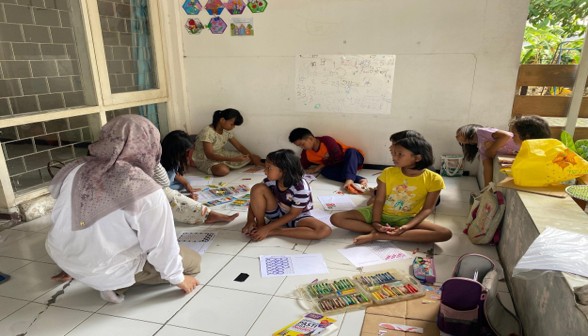
On Sunday, May 10, 2026, a volunteer teaching activity was conducted at the Alma Karya Foundation, located at Pakis, Sidorejo 1 No. 2, Surabaya. The program was attended by children ranging from early childhood education (PAUD) to elementary school level and was facilitated by students from the Early Childhood Teacher Education Program (PG-PAUD) at Universitas Negeri Surabaya (UNESA).
This initial meeting served as the first step in establishing interaction between the university students, who acted as learning facilitators, and the children at Alma Karya Foundation. The primary focus of this phase was not only on delivering educational materials but also on building emotional connections so that the children would feel comfortable, safe, and confident in participating in future learning activities.
The activity began at 9:00 a.m. with an opening session led by the student facilitators. This was followed by an introduction session between the facilitators and the participants. During this session, each child was given the opportunity to introduce themselves by mentioning their name, age, and things they liked. The purpose of this activity was to encourage children to develop confidence in speaking in front of others while also fostering positive communication and relationships between the students and facilitators.
After the introduction session, the program continued with an ice-breaking activity involving cheerful songs and simple movements that engaged all participants. The songs and movements were carefully selected to ensure they were easy and enjoyable for the children to follow. This activity successfully created a fun and energetic atmosphere, helping the children feel more relaxed and enthusiastic about the learning process.
The first main activity was a coloring session. The children were provided with pictures to color according to their own creativity and imagination. This activity served not only as an enjoyable learning experience but also as a means of developing fine motor skills, hand-eye coordination, color recognition, creativity, and imagination. The university students provided guidance to children who needed assistance and offered appreciation and encouragement for their completed artwork.
Following the coloring activity, the learning session continued with an introduction to English letters and basic vocabulary. During this session, the children were introduced to several letters of the alphabet and simple English words related to everyday life. The learning process was delivered through enjoyable methods such as repetition exercises, simple games, and interactive question-and-answer sessions, making it easier for the children to understand and remember the material. Through this activity, the children were given an opportunity to become familiar with a foreign language from an early age, helping to broaden their knowledge and develop basic English language skills.
The next activity focused on basic mathematics, specifically simple addition and subtraction. The material was presented using examples that were easy for children to understand. The facilitators connected mathematical concepts to real-life situations, enabling the children to grasp counting and arithmetic concepts in a more concrete and meaningful way. This approach helped make learning mathematics more engaging, relevant, and enjoyable for the participants.
Overall, the activity was carried out successfully and created a positive learning environment. Through various creative and interactive learning experiences, the children were encouraged to develop their cognitive, language, social, and motor skills while fostering enthusiasm and confidence in learning. It is hoped that this volunteer teaching program will continue to provide meaningful educational experiences and contribute positively to the development of children at the Alma Karya Foundation.
