VOLUNTEER PROGRAM AT PELITA INSAN BELAJAR (PIJAR) SIMOKERTO UNIT Batch 1 Group 9 - Final Meeting
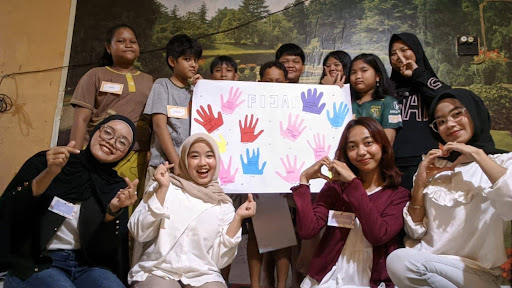
An atmosphere full of enthusiasm, togetherness, and joy could be seen during a learning activity that combined academic and creative elements. A number of children participated in a series of activities designed not only to train their thinking abilities but also to develop artistic skills and strengthen social interaction among participants. With guidance from the facilitators, the activities were carried out interactively, enjoyably, and provided a learning experience different from usual classroom routines. The children appeared enthusiastic from the beginning until the end of the session, showing that learning methods combined with creative activities were able to increase their interest in learning.
The activity consisted of two main parts: completing English exercises and creating artwork from hand-shaped colored paper. In the first stage, the children were given English exercises covering various basic learning aspects such as vocabulary recognition, understanding simple sentences, and practicing writing words and short phrases. Some of the exercises were also designed in the form of multiple-choice and short-answer questions to train their comprehension more thoroughly. The children appeared serious in trying to understand each question, although the atmosphere remained relaxed and enjoyable. They attempted to recall vocabulary they had previously learned and apply it in the answers they wrote.
After completing the academic task, the activity continued with a creative session. The children were given colorful sheets of paper that immediately attracted their attention. They then traced the shape of their hands onto the paper and carefully cut them out. The hand-shaped cutouts were later attached to a large board prepared as a collaborative artwork display. Each handprint was decorated with writing such as names, short messages, or impressions about the activity. Some children wrote simple English words, while others added motivational messages or expressions of happiness. The final artwork became a colorful and meaningful symbol of collaboration.
This activity was attended by elementary school-aged children from diverse backgrounds. They were accompanied by several facilitators who acted as mentors and supporters throughout the session. The facilitators not only provided instructions but also created a comfortable and enjoyable atmosphere so the children could feel confident while learning.
The children were active and participated enthusiastically. Some quickly understood the exercises, while others needed additional assistance, but all remained involved in the learning process. The facilitators patiently explained materials that had not yet been understood, ensuring that no child felt left behind. The interaction between the children and facilitators was also warm and friendly, creating a close and supportive learning environment.
The activity took place in a comfortable and spacious learning room that could accommodate all participants. The room had a supportive learning atmosphere, with adequate lighting and good ventilation. The walls were decorated with natural scenery paintings that created a calm and pleasant impression, allowing the children to learn more comfortably and with better focus.
In addition, the room was equipped with the materials needed for the activities, such as tables, chairs, stationery, and art supplies. The spacious area allowed the children to move freely, especially during the cutting and pasting activities. This well-organized environment supported the smooth implementation of the entire program.
The activity was conducted in one well-planned session. It began with the English exercises and continued with the creative activity after all participants had completed their tasks. The schedule was arranged carefully so that each part of the activity could run optimally. During the first session, the children were given enough time to understand and answer the questions without feeling rushed. Afterward, they were given a short break before moving on to the second session, which focused on art and creativity.
This good time management prevented the children from feeling tired or bored because they experienced a variety of activities in one meeting. The transition from academic work to creative expression also provided a refreshing change of atmosphere.
The purpose of this activity was to improve the children’s English skills while also developing their creativity. Learning English from an early age is important because it is one of the most widely used global communication tools. Through enjoyable learning methods, children can understand the material more easily and avoid feeling pressured.
In addition, the handprint artwork activity aimed to develop the children’s fine motor skills, such as drawing, cutting, and pasting. The activity also provided space for self-expression through writing and colors.
Not only that, but the activity was also designed to foster togetherness and cooperation. By creating artwork collectively, the children learned to appreciate each other’s contributions and felt proud of the results they achieved together. This approach helped develop their social and emotional aspects in balance with their academic abilities.
The activity began with the distribution of English worksheets to each participant. The facilitators explained the instructions and provided examples so the children could better understand the tasks. Afterward, the children worked independently with great concentration. During the process, the facilitators moved around the room to monitor progress and assist participants who encountered difficulties. The interactive approach encouraged the children to ask questions without hesitation.
Once all participants had completed their work, the activity continued with the creative session. The children were given colored paper and asked to trace the shape of their hands. They then carefully cut out the shapes and attached them to the prepared board. Each child was free to decorate their work according to their own ideas. Some added their names, simple English words, or positive messages.
The process took place in a relaxed and enjoyable atmosphere where the children could interact with one another. The facilitators also assisted the children, especially those who still had difficulty using scissors or attaching the paper neatly. They provided praise and encouragement to help the children feel more confident about their creations.
After all the handprints had been attached, the board became a beautiful and colorful collaborative artwork. The children looked proud when they saw their work displayed together. The sense of togetherness became even stronger when all participants gathered around and appreciated the final artwork they had created collectively.
