Second Week Learning Activities at Alma Karya Foundation: Enhancing Creativity, Knowledge, and Social Skills Through Interactive Learning
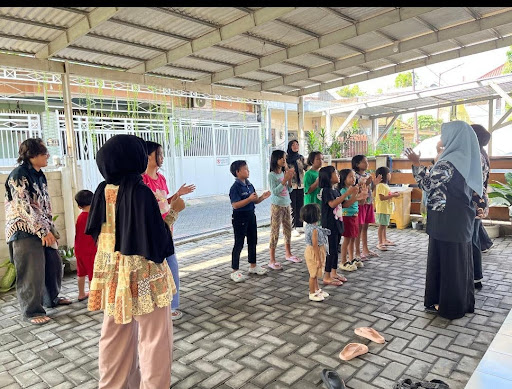
On Saturday, April 25, 2026, the second week of learning activities was successfully conducted at the Alma Karya Foundation. The program was attended by children ranging from early childhood education (PAUD) to elementary school level and was facilitated by Group 25 Batch 1 students from the Early Childhood Teacher Education Program (PG-PAUD) at Universitas Negeri Surabaya (UNESA).
The activities began with an ice-breaking session designed to increase the children's enthusiasm and readiness for learning. Through fun and engaging games, the participants became more active and motivated to take part in the day’s activities. Following the ice-breaking session, the main learning activities were carried out according to the age and developmental level of each group.
Children in the PAUD and kindergarten groups participated in coloring activities, shape recognition exercises, and simple writing practice. These activities were designed to strengthen fine motor skills, improve hand-eye coordination, enhance creativity, and support early literacy development. The children enthusiastically completed the tasks while expressing their creativity through the use of colors and drawings.
Meanwhile, elementary school students were engaged in creative thinking activities, academic exercises, and educational games. These activities encouraged problem-solving, critical thinking, and active participation while making the learning process enjoyable and meaningful. The educational games also helped maintain the children's motivation and interest throughout the session.
In addition to the basic learning activities, the university students introduced the children to the concepts of flora and fauna through pictures and interactive explanations. The participants learned about various types of plants and animals commonly found in their surroundings. This activity aimed to broaden the children’s knowledge of the natural environment while fostering a sense of responsibility and care for nature.
Throughout the program, the learning atmosphere remained positive, conducive, and full of enthusiasm. The children actively asked questions, responded to discussions, and participated in every activity and game provided. The facilitators continuously offered guidance, support, and encouragement to ensure that each child felt comfortable, confident, and motivated to learn.
Through this learning activity, it is hoped that the children will further develop their cognitive abilities, creativity, and social skills through engaging and interactive educational experiences. The program also served as a valuable opportunity to nurture curiosity, environmental awareness, and a lifelong enthusiasm for learning.
