Final Advocacy Program Meeting – Building Teamwork, Respectful Communication, and Social Values Through Interactive Activities
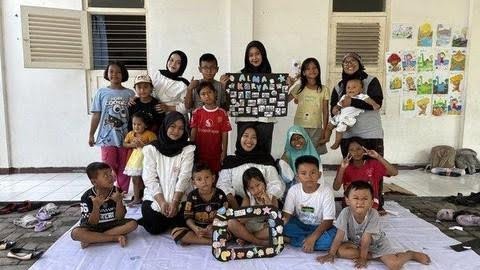
The third meeting marked the final session of the advocacy program and served as the closing event of the three-meeting series organized by Group 26, Batch 1. The activities included morning exercises, ice-breaking sessions, group puzzle games designed to develop teamwork skills, advocacy activities promoting polite communication, and a closing celebration featuring snack-sharing games and a group photo session.
The program was facilitated by all members of Group 26: Siti Rahmadhani Rahayu Puji Lestari, Misha Alezia Habibi, Farhana Nur Husein, and Iskarima Aumut Syahidah. During this meeting, a large poster labeled “ALMA KARYA” was displayed alongside photographs and children’s artwork from previous sessions, creating a memorable atmosphere that celebrated the participants’ achievements throughout the program.
The final meeting was held at Yayasan Alma Karya, Jl. Pakis Sidorejo 1 No. 2, Surabaya. The learning environment appeared more vibrant with the exhibition of children's artwork and program documentation, reflecting the positive experiences and accomplishments achieved during the advocacy activities.
The puzzle game was selected as a learning tool to strengthen teamwork and collaborative problem-solving skills. More importantly, from an advocacy perspective, the facilitators intentionally removed two or three puzzle pieces from each group and waited for the participants to request them politely. This strategy encouraged children to practice respectful communication, proper manners, and social etiquette. Through this indirect approach, the children learned the importance of speaking politely and respecting others—essential social skills that are often overlooked in formal educational settings. This activity aligned with the advocacy program’s goal of fostering positive character development from an early age.
The session began with group exercises and ice-breaking activities to rebuild enthusiasm and concentration before starting the main activities. The participants were then divided into small groups to complete puzzle challenges that required cooperation and teamwork. During the activity, the facilitators discreetly withheld several puzzle pieces, encouraging the children to ask for them using polite language and respectful communication.
Following the puzzle activity, the university students and participants worked together to attach photographs and artwork from previous meetings onto a large “ALMA KARYA” poster. The children’s creations were also displayed around the room as a collective appreciation of their creativity, effort, and learning journey throughout the program.
The next activity was a unique snack-sharing game using a string-pulling method. Each participant selected and pulled a string connected to a snack prize. As part of the activity, every child was required to say “thank you” after receiving their snack. This simple yet meaningful activity reinforced gratitude, good manners, and appreciation for others while serving as a final reward for their participation in the program.
The event concluded with a warm group photo session, officially marking the end of the Group 26 Advocacy Program. The smiles and enthusiasm shown by the participants reflected the positive experiences they had gained during the three meetings.
Overall, the three-session advocacy program implemented by Group 26, Batch 1 demonstrated a meaningful effort to apply social advocacy values within the community. The program not only provided educational benefits but also empowered children by helping them develop literacy and numeracy skills, creativity, teamwork, and respectful communication. Through interactive and play-based learning approaches, the facilitators successfully created an inclusive, engaging, and child-friendly learning environment.
It is hoped that the success of this program can serve as a model for future community engagement initiatives, inspiring other groups to design meaningful social interventions that positively impact children's growth, development, and well-being.
