Enhancing Early Writing and Numeracy Skills Through Interactive Learning Activities at Rumah Belajar Novaloka
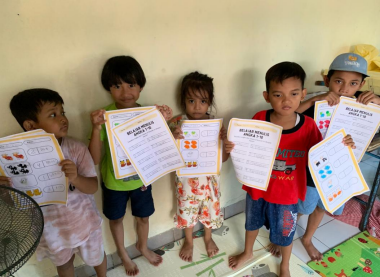
The second-day activity of Group 16 Batch 1 was carried out during the second week as part of the volunteer program organized by the university. The activity took place at Rumah Belajar Novaloka from 1:00 p.m. to 2:00 p.m. and was attended by the children participating in the learning program. Compared to the first meeting, the atmosphere during this second session was noticeably more conducive, as the children had begun to feel comfortable interacting with the university student volunteers. The activity continued to focus on supporting the development of children's basic skills, particularly in writing, reading, and numeracy, while also providing educational assistance for children who needed additional learning support. Furthermore, the program served as part of the implementation of the Advocacy course, which emphasizes the fulfillment of children's rights to access quality education.
The session began with a simple opening activity, including a collective prayer to ensure that the activities would run smoothly. Following the opening, the facilitators conducted a short ice-breaking activity. Unlike the previous meeting, the ice breaker required less time because the children were already familiar with the presence of the volunteers and felt more comfortable participating in the activities. The chosen ice breaker was the children's song Naik Delman, which was accompanied by hand movements and gestures following the facilitators’ instructions. The children responded enthusiastically and actively participated in the activity. The purpose of this session was to build excitement, increase motivation, and prepare the children for the main learning activities.
After the ice-breaking session, the children were introduced to the main activity, which involved completing worksheets that had been prepared by the facilitators. The worksheets contained tracing exercises involving letters and numbers. The objective of this activity was to strengthen the children's foundational writing skills and improve their hand-eye coordination. During the implementation, it became clear that the children's abilities varied considerably. Some participants were already able to trace letters and numbers neatly and accurately, while others still experienced difficulties controlling their hand movements and following the lines correctly.
Throughout the activity, the university students played an active role in assisting children who needed additional guidance. The support was provided patiently and gently to ensure that the children remained comfortable and confident while learning. Those who initially struggled gradually became more capable of completing the tasks, although some still required further practice. The individualized assistance helped create a positive learning environment where every child felt encouraged to participate according to their own abilities.
Once the tracing activity was completed, the children continued with a coloring task. The worksheet included several objects that needed to be counted before being colored. This activity combined coloring with simple counting exercises, allowing children to develop numeracy skills through an enjoyable and engaging approach. By integrating art and mathematics, the facilitators aimed to make learning more meaningful and less intimidating for the participants.
Many of the children showed enthusiasm when counting the objects displayed on the worksheet, although some still required guidance from the facilitators. A few children appeared more interested in coloring than counting and occasionally needed reminders to follow all of the instructions. Nevertheless, most participants were able to complete the activity successfully and demonstrated a willingness to learn throughout the session.
Compared to the first meeting, the learning atmosphere during the second session was noticeably calmer and more focused. The children were able to remain seated for longer periods and demonstrated greater concentration while completing their assignments. This improvement indicated positive progress in their ability to maintain attention and engage in structured learning activities.
At the end of the session, the children were invited to present their completed work to the facilitators and their peers. Many participants appeared proud of their achievements, especially those who had successfully completed the worksheets independently. This opportunity to showcase their work served as a form of positive reinforcement and appreciation, helping to boost their confidence and motivation to continue learning.
Overall, the second day of the volunteer program was successfully implemented. The children demonstrated progress in their ability to trace letters, recognize numbers, and participate in numeracy-related activities. In addition, they became increasingly familiar with the learning routines and showed greater confidence in engaging with the facilitators. The positive responses and active participation observed throughout the session suggest that the activities contributed meaningfully to the children's educational development and created a supportive learning environment at Rumah Belajar Novaloka.
